Alaskan Klee Kai
What it's like
The Klee Kai is alert and energetic, closely bonded to its household but reserved and often wary with strangers, which makes it a ready watchdog rather than a dog that greets everyone. It is known as a vocal breed that tends to howl, yip and make chattering sounds, and many keep an urge to chase small animals.
Size and growth
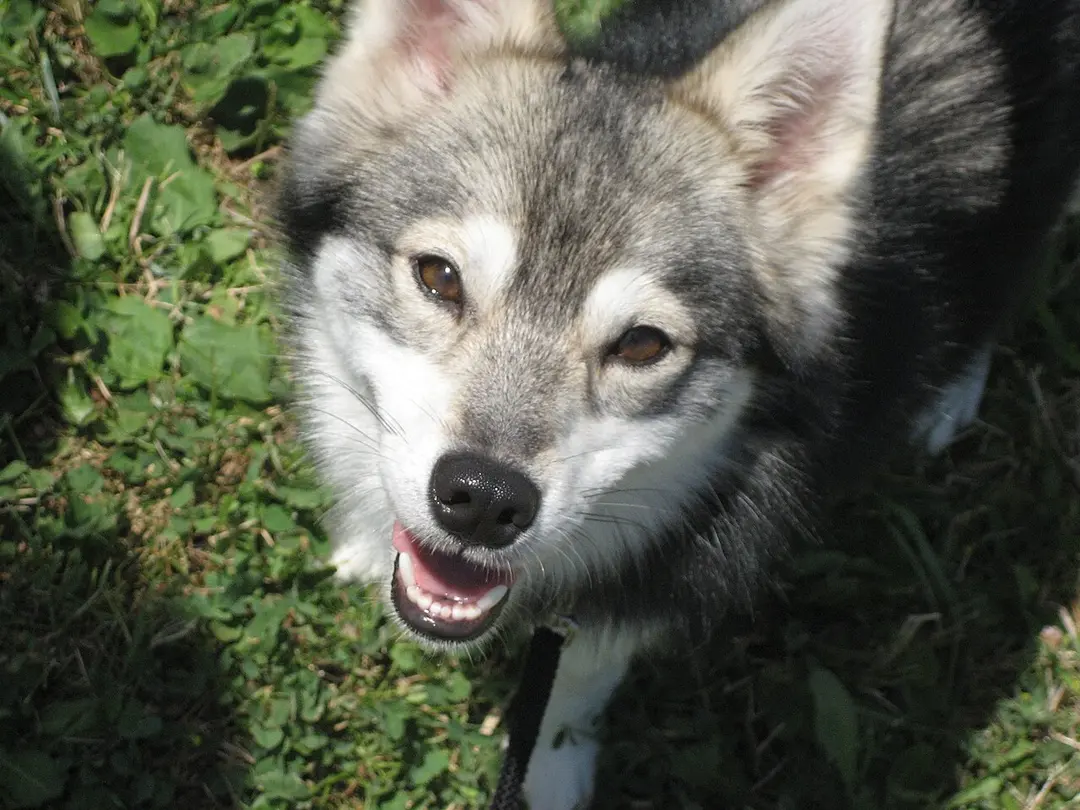
In appearance it is a scaled-down husky, with erect triangular ears, a wedge-shaped head and a well-furred tail that usually curls over the back. The double coat may be standard or full length and is black and white, grey and white, or red and white; all-white dogs occur but are not accepted for showing. Toy, miniature and standard varieties are recognised, divided by height.
Varieties
Puppy growth
Lifespan
Where it comes from
The Alaskan Klee Kai is a companion breed, developed in Alaska by Linda Spurlin from the nineteen-seventies to give the look of a northern sled dog in a smaller frame. Although Spurlin's dogs descended mainly from Alaskan Huskies, the Schipperke and the American Eskimo Dog are widely reported to have been added to bring size down. The name is usually said to come from an Inuit term meaning small dog. The breed has since joined the American Kennel Club's Foundation Stock Service.
Breed standard
Questions people ask
Compare with related
Sources
- 1Morrill et al., 2022. Ancestry-inclusive dog genomics challenges popular breed stereotypes. Science 376: eabk0639 (Darwin's Ark). ↑
- 2Dogs Trust. Finding a good, responsible breeder. ↑
- 3American Kennel Club. Screening puppy buyers: how top breeders find the best homes. ↑
- 4American Kennel Club. Alaskan Klee Kai breed page. ↑
- 5United Kennel Club. Alaskan Klee Kai breed figures. ↑
- 6United Kennel Club. Toy Alaskan Klee Kai breed figures. ↑
- 7United Kennel Club. Miniature Alaskan Klee Kai breed figures. ↑
- 8United Kennel Club. Standard Alaskan Klee Kai breed figures. ↑
- 9
- 10Hawthorne et al., 2004. Body-weight changes during growth in puppies of different breeds. Journal of Nutrition 134(8 Suppl): 2027S–2030S (WALTHAM). ↑
- 11Wikidata. Item Q38152. ↑
- 12UKC. Alaskan Klee Kai breed standard. ↑