American Foxhound
What it's like
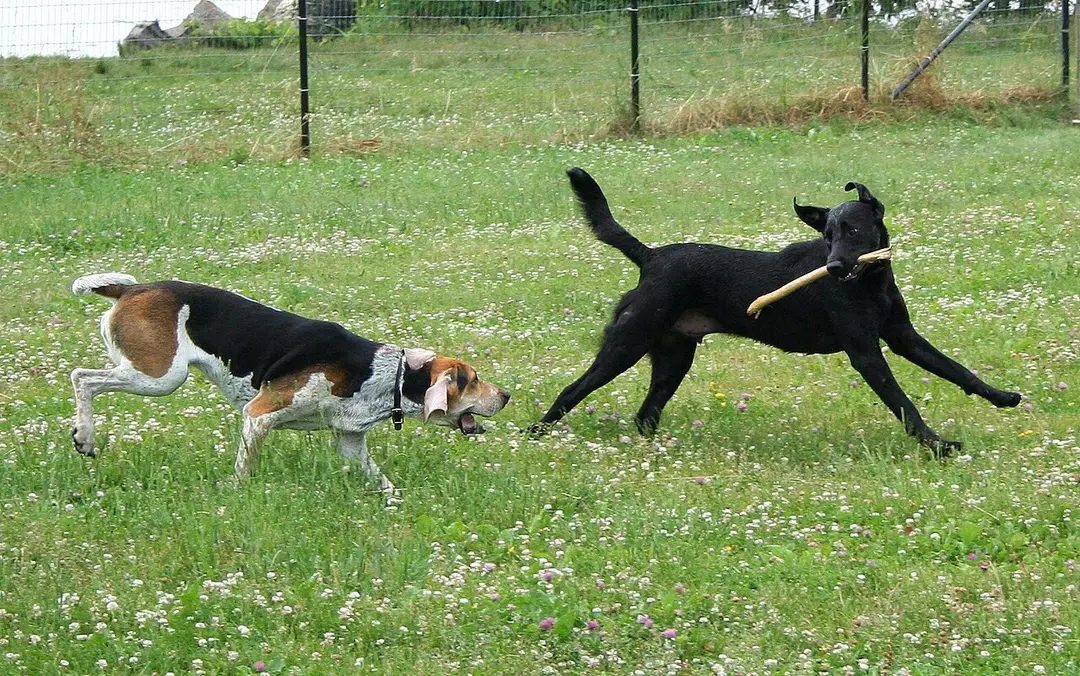
At home it is mild, friendly and easy with other dogs, traits often credited to pack life. In the field it is tireless and single-minded, and hunters value its musical, far-carrying voice as one of the breed's defining traits.
Living with one
Size and growth
Next to the English Foxhound it is lighter in bone and longer in the leg, with a rangy frame, a long head, low-set ears and large, gentle eyes. The close, hard coat is of medium length and can be any colour, though tricolour is common.
Puppy growth
Lifespan
Where it comes from
The American Foxhound later split into regional strains, among them the Walker, Trigg, Goodman and July hounds, developed in Kentucky and elsewhere in the South during the nineteenth century. Most were named after the breeders who kept them; the July took its name from a hound. The American Kennel Club recognised the breed in the eighteen-eighties, and in the twentieth century Virginia adopted it as its state dog. It was bred to hunt the fox by scent over rough country, and in some places other quarry too. It is still used with mounted packs, in field trials that test speed and drive, and by hunters who follow the chase on foot or listen to it from a hilltop at night.
Breed standard
Questions people ask
Compare with related
Sources
- 1Morrill et al., 2022. Ancestry-inclusive dog genomics challenges popular breed stereotypes. Science 376: eabk0639 (Darwin's Ark). ↑
- 2Dogs Trust. Finding a good, responsible breeder. ↑
- 3American Kennel Club. Screening puppy buyers: how top breeders find the best homes. ↑
- 4
- 5American Kennel Club. American Foxhound breed page. ↑
- 6
- 7Hawthorne et al., 2004. Body-weight changes during growth in puppies of different breeds. Journal of Nutrition 134(8 Suppl): 2027S–2030S (WALTHAM). ↑
- 8Wikidata. Item Q37514. ↑
- 9American Kennel Club. American Foxhound breed history. ↑