Anatolian Shepherd Dog
What it's like
In temperament it is calm, watchful and independent, devoted to its own people and reserved with strangers. Its guarding is largely instinctive rather than trained. Since the nineteen-nineties, conservation projects in Namibia have placed these dogs with livestock farmers so that fewer cheetahs are shot in retaliation for lost stock.
Living with one
Size and growth
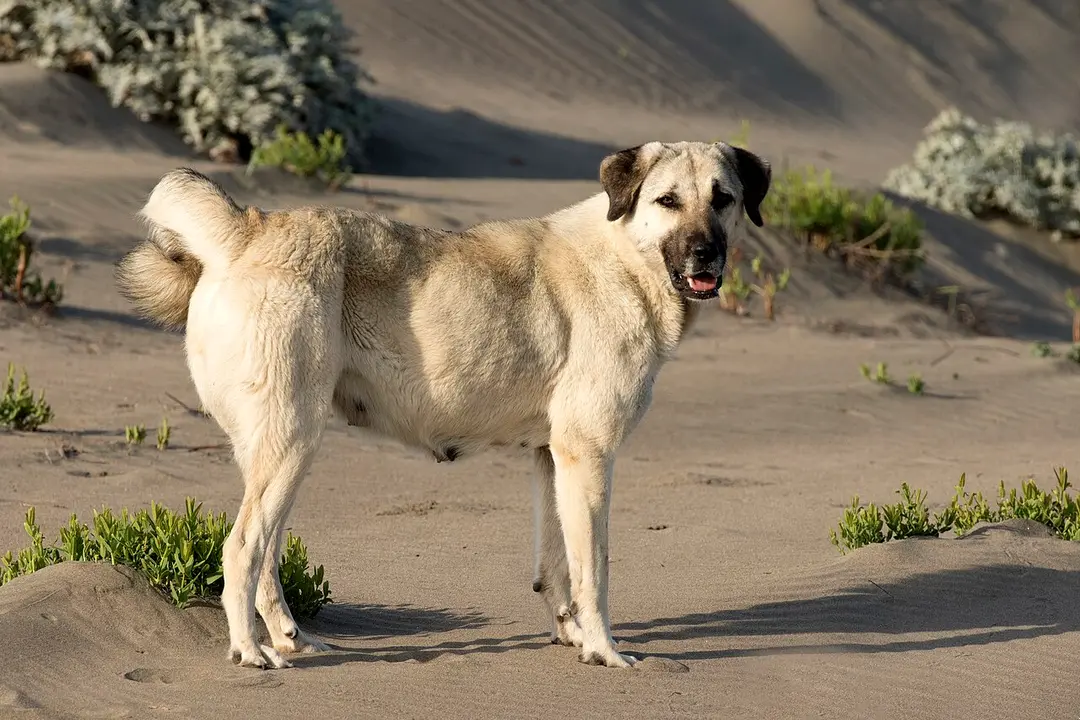
It is a large, heavy-boned yet agile dog with a broad head, dropped ears and a tail that curls over the back when it is alert. The dense double coat may be short or longer, and is often fawn with a black mask, though other colours occur. Turkish shepherds traditionally fitted their dogs with iron-spiked collars to protect the throat in fights with wolves.
Two types
Puppy growth
Lifespan
Where it comes from
The Anatolian Shepherd Dog became established in the West in the second half of the twentieth century, when dogs brought out of Turkey by archaeologists and servicemen formed the foundation of breeding in Britain and North America. Western breeders gathered dogs of several regional types under the single Anatolian name, and the breed's relationship with the Kangal has long been debated. Its work has always been to live among sheep and goats as a guardian rather than a herder, deciding for itself how to meet wolves and jackals.
Breed standard
Questions people ask
Compare with related
Sources
- 1Morrill et al., 2022. Ancestry-inclusive dog genomics challenges popular breed stereotypes. Science 376: eabk0639 (Darwin's Ark). ↑
- 2Dogs Trust. Finding a good, responsible breeder. ↑
- 3American Kennel Club. Screening puppy buyers: how top breeders find the best homes. ↑
- 4
- 5American Kennel Club. Anatolian Shepherd Dog breed standard. ↑
- 6Hawthorne et al., 2004. Body-weight changes during growth in puppies of different breeds. Journal of Nutrition 134(8 Suppl): 2027S–2030S (WALTHAM). ↑
- 7AAFCO, 2016. AAFCO Dog and Cat Food Nutrient Profiles. Association of American Feed Control Officials. ↑
- 8The Kennel Club. Anatolian Shepherd Dog. ↑
- 9The Kennel Club. Turkish Kangal Dog. ↑