Bedlington Terrier
What it's like
At home the Bedlington is gentle and affectionate, and is often calm indoors. Its working background still shows: it is alert and quick off the mark, and it can hold its ground if challenged by another dog.
Living with one
Size and growth
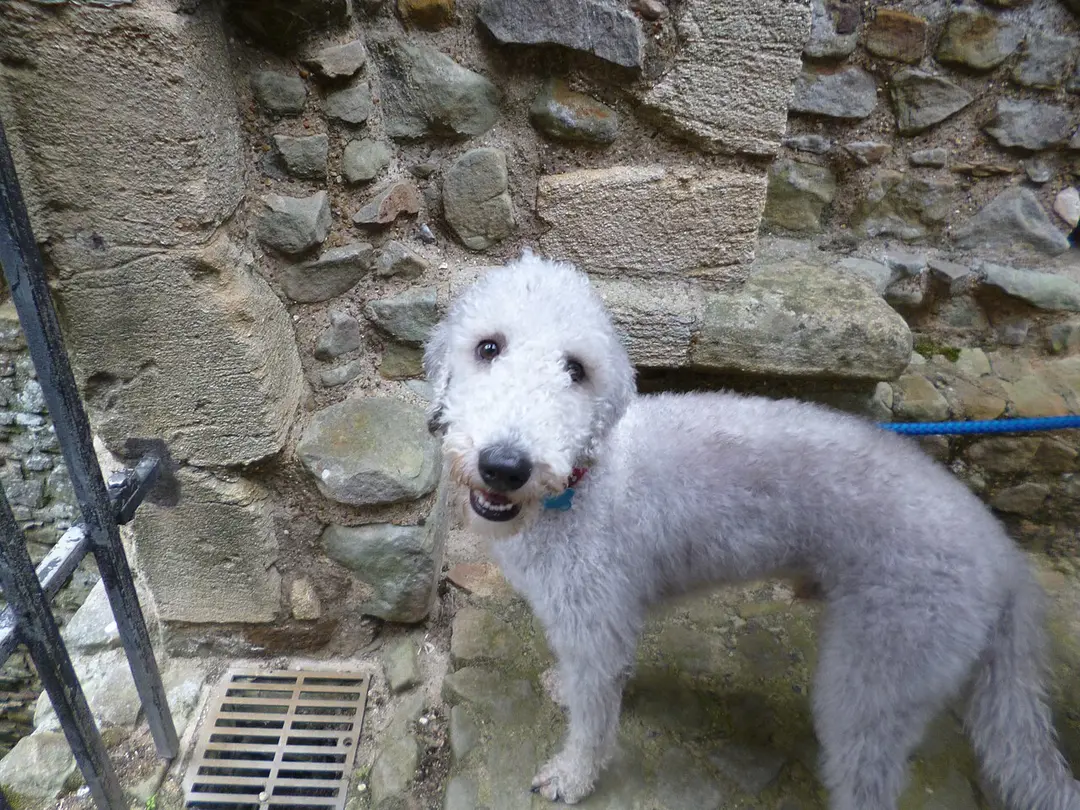
The breed looks unlike most other terriers. It has a narrow, pear-shaped head crowned with a soft topknot, low-set ears ending in silky tassels, a back arched over the loin and long legs that give it a light, springing gait. The coat is a crisp mixture of hard and soft hair that stands away from the skin and tends to twist into curls, especially on the head and face. Recognised colours are blue, liver and sandy, with or without tan, and puppies are born dark, lightening as they mature.
Puppy growth
Health and lifespan
- Blood blister in the ear flapMore likelyImpact: moderate
Lifespan
Where it comes from
The Bedlington Terrier takes its present name from the Northumberland town of Bedlington, where local breeders refined it during the nineteenth century. Beyond rabbiting, it was kept by miners, nailmakers and poachers to kill rats and other vermin, and it was valued for being both quick and game. It is often said that whippet blood was added for speed, though this is told rather than firmly recorded.
Breed standard
Questions people ask
Compare with related
Sources
- 1Morrill et al., 2022. Ancestry-inclusive dog genomics challenges popular breed stereotypes. Science 376: eabk0639 (Darwin's Ark). ↑
- 2Dogs Trust. Finding a good, responsible breeder. ↑
- 3American Kennel Club. Screening puppy buyers: how top breeders find the best homes. ↑
- 4American Kennel Club. Bedlington Terrier breed page. ↑
- 5American Kennel Club. Bedlington Terrier breed standard. ↑
- 6
- 7Hawthorne et al., 2004. Body-weight changes during growth in puppies of different breeds. Journal of Nutrition 134(8 Suppl): 2027S–2030S (WALTHAM). ↑
- 8
- 9
- 10
- 11American Kennel Club. Bedlington Terrier history. ↑