Border Terrier
What it's like
In temperament the Border is good-natured and determined, with a strong urge to chase small animals. It is often described as less quarrelsome with other dogs than many terriers.
Living with one
Size and growth
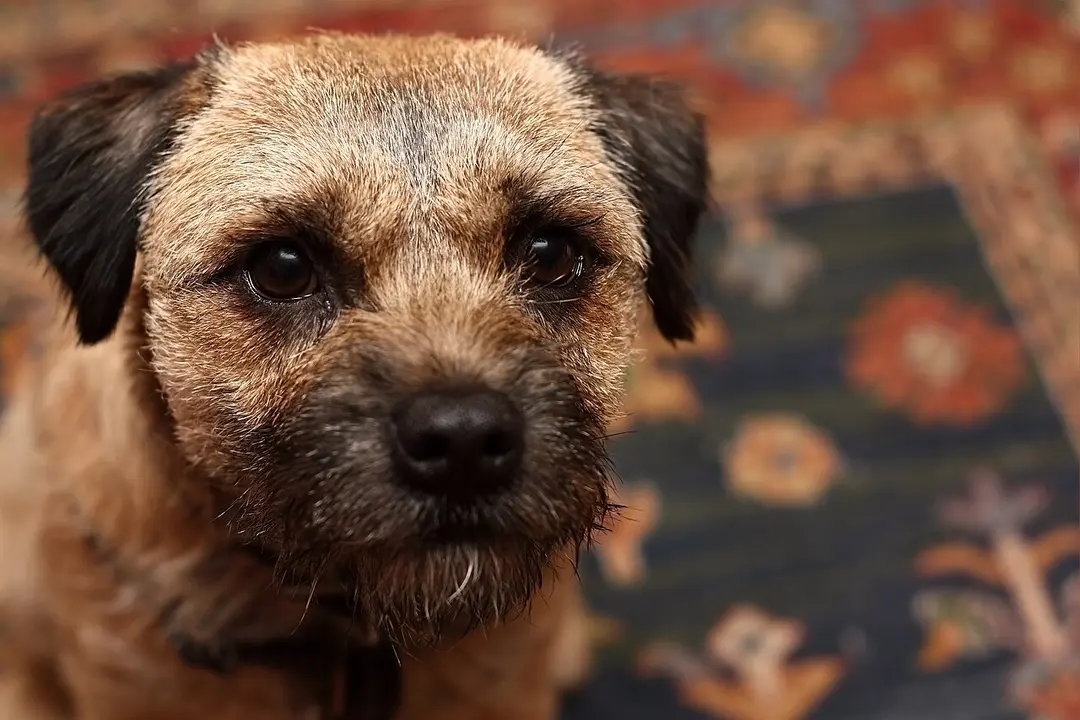
That explains its build: it is longer in the leg than many terriers, yet narrow enough that the standard asks for a body that can be spanned by hands behind the shoulders. The head is often likened to an otter's. The coat is harsh and dense over a close undercoat, in red, wheaten, grizzle and tan, or blue and tan, and the skin is thick and loose, which is said to help protect the dog in a fight with a fox.
Puppy growth
Health and lifespan
- Cushing's syndromeMuch more likelyImpact: serious
- Corneal ulcersMore likelyImpact: moderate
- Gum diseaseSlightly more likelyImpact: moderate
- Underactive thyroidSlightly more likelyImpact: moderate
Lifespan
Where it comes from
The Border Terrier was shaped by working hunt servants and farmers along the Anglo-Scottish border rather than by show breeders. The Robson and Dodd families are usually credited with fixing its type during the nineteenth century. It remained a working dog after many other terriers had moved into the show ring, and the Kennel Club recognised it only shortly after the First World War, the same year its breed club was founded. Hunting with a Border Terrier meant keeping pace with horses over rough hill ground and then following a fox underground.
Breed standard
Questions people ask
Compare with related
Sources
- 1Morrill et al., 2022. Ancestry-inclusive dog genomics challenges popular breed stereotypes. Science 376: eabk0639 (Darwin's Ark). ↑
- 2Dogs Trust. Finding a good, responsible breeder. ↑
- 3American Kennel Club. Screening puppy buyers: how top breeders find the best homes. ↑
- 4Border Terrier Club of America. Grooming. ↑
- 5
- 6
- 7VetCompass UK. Primary-care veterinary records. ↑
- 8American Kennel Club. Border Terrier breed page. ↑
- 9
- 10Hawthorne et al., 2004. Body-weight changes during growth in puppies of different breeds. Journal of Nutrition 134(8 Suppl): 2027S–2030S (WALTHAM). ↑
- 11
- 12
- 13
- 14
- 15
- 16
- 17The Border Terrier Club. Origins of the breed. ↑