Cirneco dell'Etna
What it's like
At home it is affectionate and gentle with its own people, lively and quick to react, and can be reserved with strangers. It keeps a strong hunting instinct and the independent streak of a dog that works at a distance from the hunter.
Living with one
Size and growth
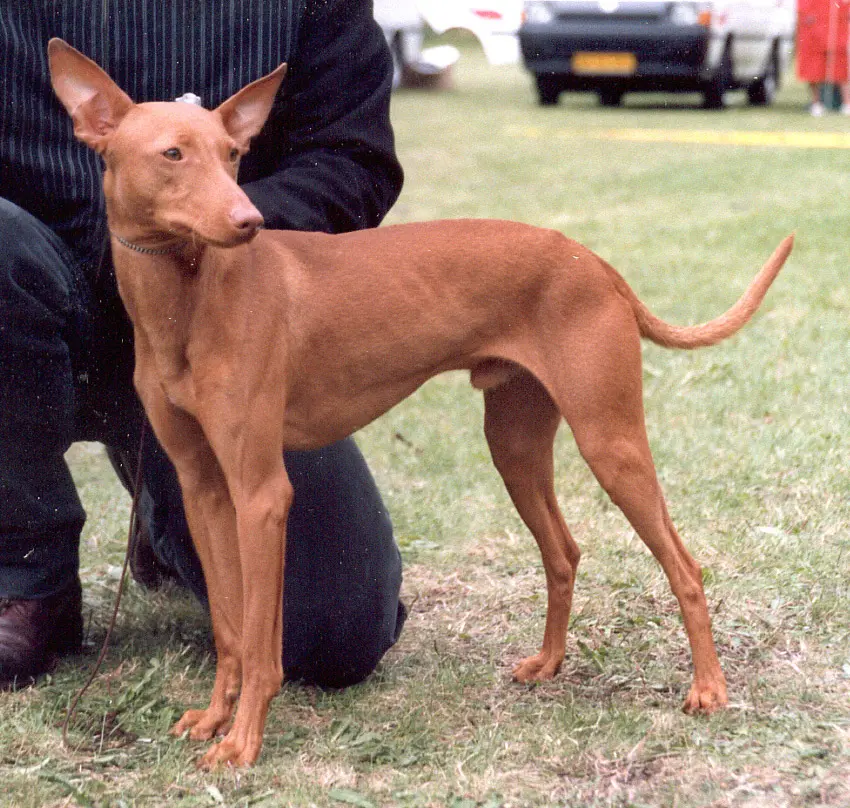
It is a slender, square, lightly built dog with a long, narrow head and upright ears set close together. The short, sleek coat, slightly longer on the body, is usually tan from pale fawn to deeper shades, sometimes with white markings. A distinctive point is that the nose, lips and eye rims are flesh-coloured to match the coat rather than black, and the eyes are amber or ochre.
Puppy growth
Lifespan
Where it comes from
The Cirneco dell'Etna owes its modern form to the revival begun in the nineteen-thirties, when Giuseppe Solaro studied the surviving dogs and drew up the first standard. The Italian kennel club recognised the breed at the end of that decade. For much of the twentieth century it stayed mainly a Sicilian working dog, and it has become known outside Italy only fairly recently. It was bred to hunt over rough lava ground in hot weather for long days, using scent and hearing as much as sight to find rabbits in rock and scrub.
Breed standard
Questions people ask
Compare with related
Sources
- 1Morrill et al., 2022. Ancestry-inclusive dog genomics challenges popular breed stereotypes. Science 376: eabk0639 (Darwin's Ark). ↑
- 2Dogs Trust. Finding a good, responsible breeder. ↑
- 3American Kennel Club. Screening puppy buyers: how top breeders find the best homes. ↑
- 4
- 5
- 6Hawthorne et al., 2004. Body-weight changes during growth in puppies of different breeds. Journal of Nutrition 134(8 Suppl): 2027S–2030S (WALTHAM). ↑
- 7American Kennel Club. Cirneco dell'Etna. ↑