Entlebucher Mountain Dog
What it's like
Entlebuchers are lively, self-assured and closely attached to their own people, with a watchful reserve towards strangers. Quick to learn and keen to work, they bring a herding dog's energy and alertness to family life, and some have taken up obedience and agility.
Living with one
Size and growth
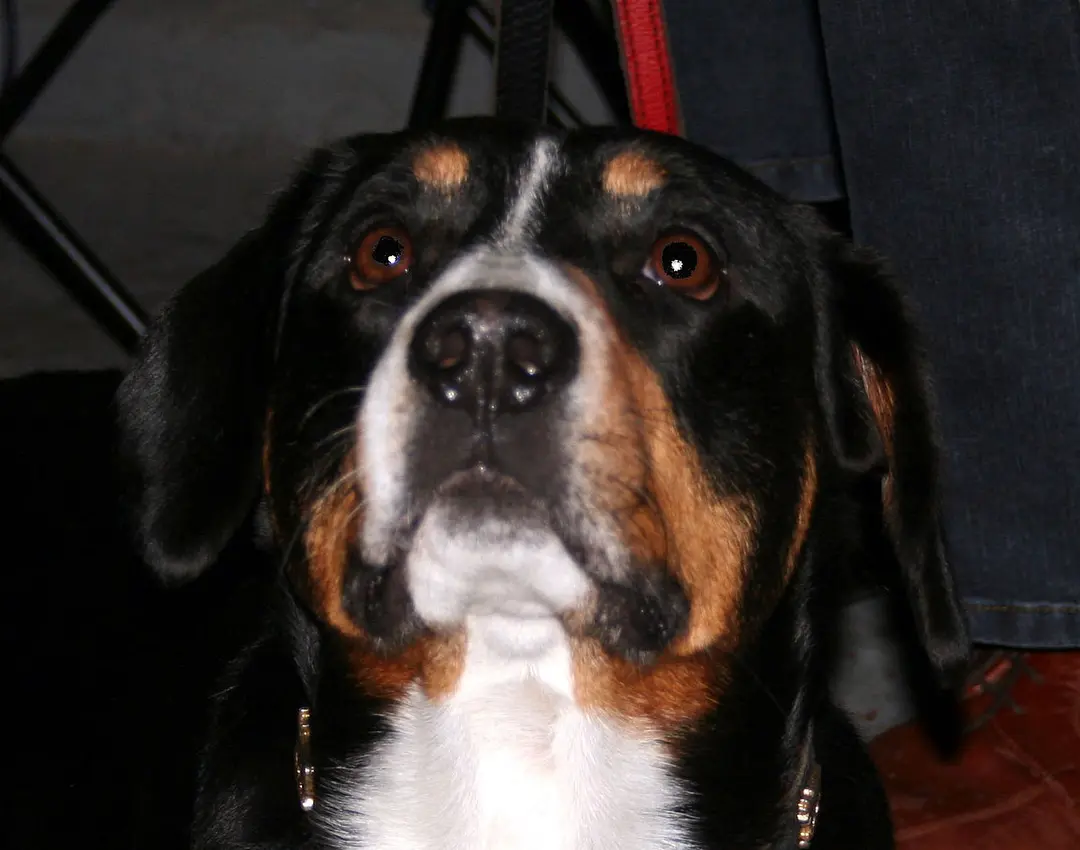
Smaller than the Bernese, Greater Swiss and Appenzeller, it is compact, muscular and slightly longer than tall. The short, close, hard coat is glossy and, under the breed standard, tricoloured: black, with tan from yellow to rust on the face and legs, and symmetrical white on the head, chest and feet. Some are born with a natural bobtail, others with a full tail.
Puppy growth
Lifespan
Where it comes from
The Entlebucher Mountain Dog, called the Entlebucher Sennenhund in Switzerland after the Entlebuch valley and the Senn, or Alpine dairy herdsman, stayed rare for years after entering the stud book. A breed club formed in the nineteen-twenties and a written standard followed, fixing the type. Numbers remained small for decades, and wider recognition came late: the American Kennel Club accepted it only in the early twenty-first century, in its herding group. It was bred to drive cattle between farm and pasture, nipping at heels, and to guard the farmstead.
Breed standard
Questions people ask
Compare with related
Sources
- 1Morrill et al., 2022. Ancestry-inclusive dog genomics challenges popular breed stereotypes. Science 376: eabk0639 (Darwin's Ark). ↑
- 2Dogs Trust. Finding a good, responsible breeder. ↑
- 3American Kennel Club. Screening puppy buyers: how top breeders find the best homes. ↑
- 4
- 5American Kennel Club. Entlebucher Mountain Dog breed page. ↑
- 6
- 7Hawthorne et al., 2004. Body-weight changes during growth in puppies of different breeds. Journal of Nutrition 134(8 Suppl): 2027S–2030S (WALTHAM). ↑