Finnish Spitz

Lively, vocal and independent-minded.
Adult weight
14–16 kg
31–35 lb
Lifespan
13–15 yrs
Class · Field
also Companion

What it's like

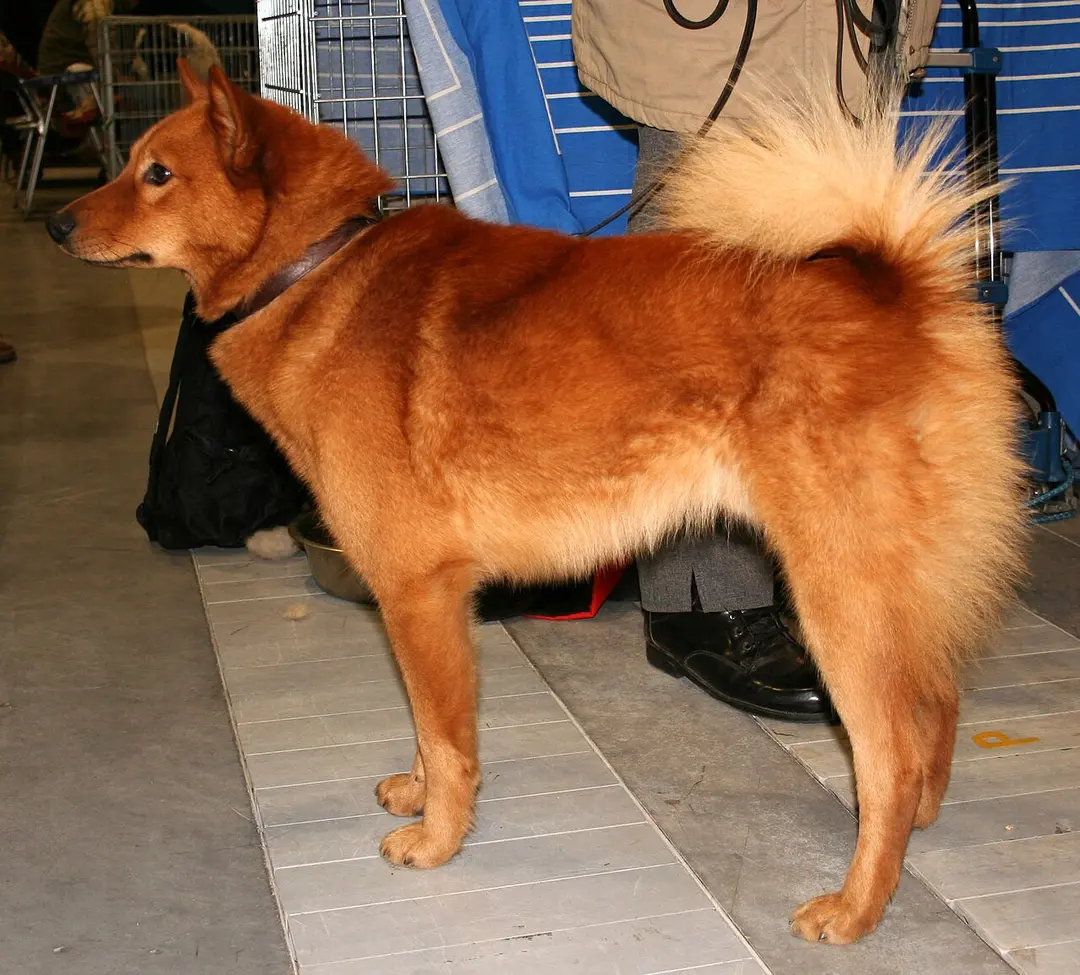
The Finnish Spitz has a fox-like look: squarely built and light on its feet, with a pointed muzzle, small pricked ears and a plumed tail curled over the back. The double coat is golden-red, paler on the chest and underside. Puppies are often darker, with black-tipped hairs that clear as they grow. It is lively, friendly and alert, independent in outlook, vocal, and can be reserved with strangers.

Day to day
Activity
Needs lots of exercise
Intelligence
Learns readily, likes games
Handler demand
Needs steady training
With people
Affection
Affectionate on its own terms
Loyalty
Bonded to its family
Independence
Decides for itself
Around the home
Sensitivity
Average
Voice
Very vocal
Prey drive
Likely to chase small pets
Breed explains only about 9% of how individual dogs differ in behaviour1. Meet the dog. A good breeder breeds for temperament as well as health, and matches each puppy's personality to the right home2,3.
Is a Finnish Spitz right for you?
Take the breed matcher

Living with one

It has a long coat. Most of the shedding comes when the seasons change. Plan on daily brushing. It needs plenty of exercise compared with other breeds.

Size and growth

A Finnish Spitz is a medium dog, about the weight of a grown Staffordshire Bull Terrier. It is one of the lightest medium breeds.

Puppy growth

Reference curve · community data appears as owners log
Finnish Spitz dogs reach half their adult weight at about 5 months. They grow fastest between 3 and 4 months old.
Fully grown
11 mo
Both sexes, at 99% of adult weight7
Male
Female
Shaded: expected range
051015202m4m6m9m12m18m
051015202m3m4m6m9m12m18m
Age
Male
Female
2 months
3.0–3.5 kg 6.6–7.7 lb
3.4–3.8 kg 7.5–8.4 lb
3 months
4.5–5.1 kg 9.9–11.2 lb
4.8–5.5 kg 10.6–12.1 lb
4 months
6.5–7.4 kg 14.3–16.3 lb
6.8–7.8 kg 15.0–17.2 lb
5 months
8.4–9.6 kg 18.5–21.2 lb
8.6–9.9 kg 19.0–21.8 lb
6 months
10.0–11.4 kg 22.0–25.1 lb
10.1–11.6 kg 22.3–25.6 lb
7 months
11.2–12.8 kg 24.7–28.2 lb
8 months
12.1–13.8 kg 26.7–30.4 lb
12.0–13.7 kg 26.5–30.2 lb
9 months
12.7–14.5 kg 28.0–32.0 lb
12.5–14.3 kg 27.6–31.5 lb
10 months
13.1–14.9 kg 28.9–32.8 lb
12.9–14.8 kg 28.4–32.6 lb
11 months
13.4–15.3 kg 29.5–33.7 lb
13.2–15.1 kg 29.1–33.3 lb
12 months
13.6–15.5 kg 30.0–34.2 lb
13.4–15.3 kg 29.5–33.7 lb
15 months
13.9–15.9 kg 30.6–35.1 lb
13.8–15.8 kg 30.4–34.8 lb

Lifespan

No vet study has measured how long Finnish Spitz dogs live yet. The 13–15 years shown is a general figure without a published source.

Where it comes from

The Finnish Spitz is a Finnish hunting dog used mainly on forest game birds: when it finds one up in a tree it barks, which marks the bird for the hunter. Eastern and northern Finland held most of the true-to-type dogs when the breed's register opened in the 1890s. Named Finland's national dog in 1979, it was combined with the Karelian-Finnish Laika in 2006 under one standard4,8.

The Finnish Spitz descends from spitz-type dogs kept by the peoples of the northern forests. By the late nineteenth century it was close to disappearing through crossing with imported breeds. Its revival is credited to the Helsinki sportsmen Hugo Sandberg and Hugo Roos, who noticed pure examples while hunting in the north and set about breeding from them. The breed reached Britain in the nineteen-twenties, where it is often nicknamed the Finkie. It works by finding capercaillie and black grouse, then holding the bird's attention with a ringing, repeated bark, often with a gently swaying tail, until the hunter can approach. Unlike a pointing dog, it marks the bird by voice, not by standing still, and is not used for retrieving. Finland holds barking trials for the breed, and the national winner is titled King of Barkers.

Breed standard

The Finnish Spitz is judged against standard no. 49, in group 5, Spitz and primitive types4.

Questions people ask

General guidance for dogs rather than a measured Finnish Spitz figure: most females have a first season somewhere between six and fifteen months, and cycles then settle to roughly every 180 days. Smaller breeds tend to start earlier and larger ones later, so a medium-sized breed is most likely somewhere in the middle.
Track your own Finnish Spitz
Log a minute a day and watch them sit on these curves. Free.

Sources

Uncited on this page: Lifespan — no reviewed source yet, so it is a general reference figure rather than a published one.
Something wrong on this page?
Parts of this page were written by AI ·