Harrier
What it's like
In temperament the Harrier is friendly, outgoing and active. Bred for pack life, it usually gets on with other dogs. It has a strong voice, and once it picks up a scent it follows its nose independently.
Living with one
Size and growth
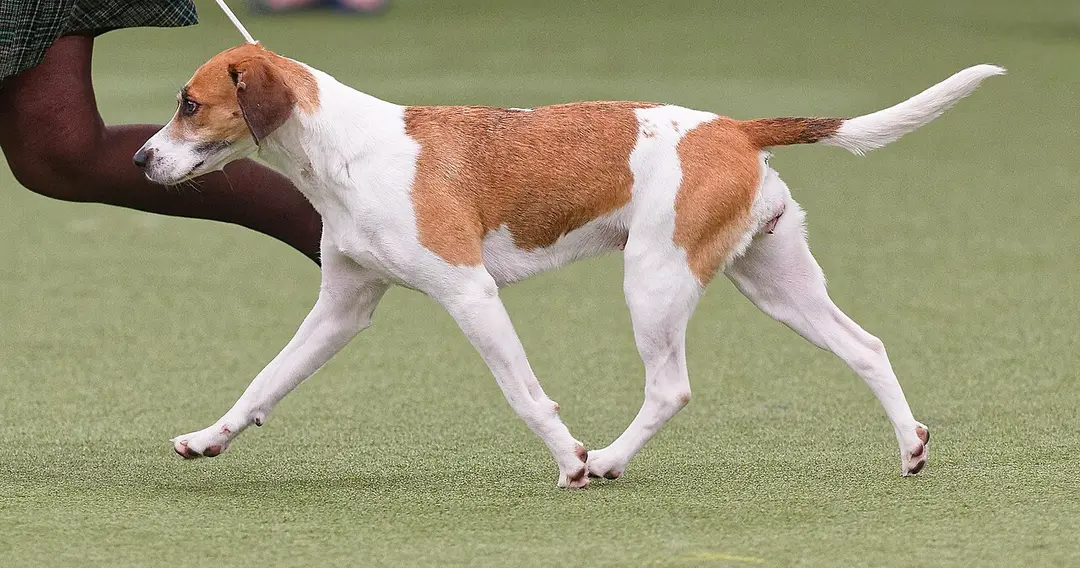
In size and build it sits between the Beagle and the English Foxhound. It is a strong, well-boned hound with a level back, a deep chest, a broad head and hanging ears. The short, dense coat may be any colour, often white with black, tan or lemon markings.
Puppy growth
Lifespan
Where it comes from
The Harrier is a British pack hound, and its later history has been shaped more by hunting kennels than by the show ring. Most working Harriers in Britain are recorded in the stud book of the Association of Masters of Harriers and Beagles, founded in the late nineteenth century, rather than with the Kennel Club. After hunting wild mammals with dogs was banned in England and Wales in the early twenty-first century, most packs there turned to trail hunting, following a laid scent. Show Harriers are scarce on both sides of the Atlantic. It was bred to work as part of a pack, tracking hare by scent across open country and keeping up a steady pace over long distances.
Breed standard
Questions people ask
Compare with related
Sources
- 1Morrill et al., 2022. Ancestry-inclusive dog genomics challenges popular breed stereotypes. Science 376: eabk0639 (Darwin's Ark). ↑
- 2Dogs Trust. Finding a good, responsible breeder. ↑
- 3American Kennel Club. Screening puppy buyers: how top breeders find the best homes. ↑
- 4
- 5American Kennel Club. Harrier breed page. ↑
- 6
- 7Hawthorne et al., 2004. Body-weight changes during growth in puppies of different breeds. Journal of Nutrition 134(8 Suppl): 2027S–2030S (WALTHAM). ↑
- 8The Kennel Club. Harrier. ↑