Icelandic Sheepdog
What it's like
In temperament the breed is friendly, cheerful and inquisitive, and generally not aggressive. It is quick to bark, enjoys company and stays close to its people.
Living with one
Size and growth
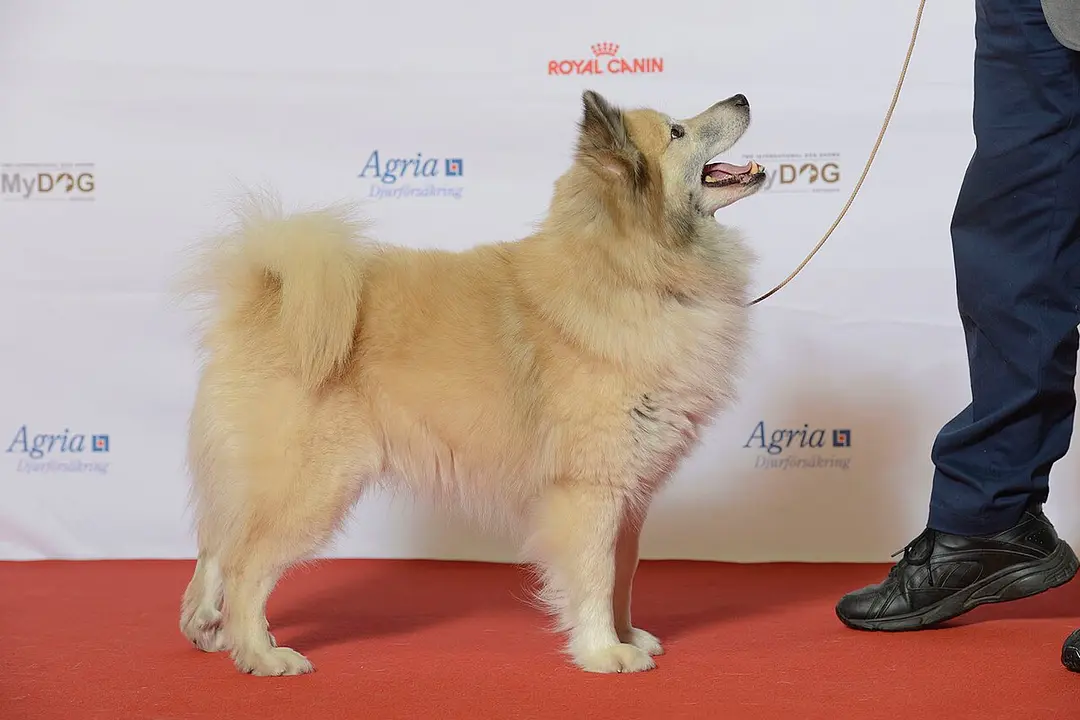
It is a compact spitz, slightly longer than tall, with triangular pricked ears and a bushy tail curled over the back. The dense, weatherproof double coat comes in short and long forms. Colours include shades of tan from cream to reddish-brown, chocolate, grey and black, always with white markings. Standards favour double dewclaws on the hind legs.
Puppy growth
Lifespan
Where it comes from
The Icelandic Sheepdog is Iceland's only native dog breed, and its rescue in the later twentieth century turned a scarce farm dog into a recognised pedigree breed. The Icelandic Kennel Club, founded in the late nineteen-sixties, made the breed's preservation one of its early aims, and breeders worked to keep the old farm type. Recognition by international kennel bodies followed, and the breed is now kept across Europe and North America. Iceland dogs were known abroad long before; Shakespeare's Henry the Fifth uses "Iceland dog" as an insult. On open, treeless land the breed worked largely by voice and movement. It drove and gathered livestock, searched for strayed sheep and barked to warn of visitors or birds of prey.
Breed standard
Questions people ask
Compare with related
Sources
- 1Morrill et al., 2022. Ancestry-inclusive dog genomics challenges popular breed stereotypes. Science 376: eabk0639 (Darwin's Ark). ↑
- 2Dogs Trust. Finding a good, responsible breeder. ↑
- 3American Kennel Club. Screening puppy buyers: how top breeders find the best homes. ↑
- 4
- 5
- 6Hawthorne et al., 2004. Body-weight changes during growth in puppies of different breeds. Journal of Nutrition 134(8 Suppl): 2027S–2030S (WALTHAM). ↑
- 7Icelandic Sheepdog Association of America. Breed history. ↑