Irish Red and White Setter
What it's like
In temperament the breed is affectionate, lively and friendly, a good-natured companion at home and a keen, determined worker with plenty of stamina in the field.
Living with one
Size and growth
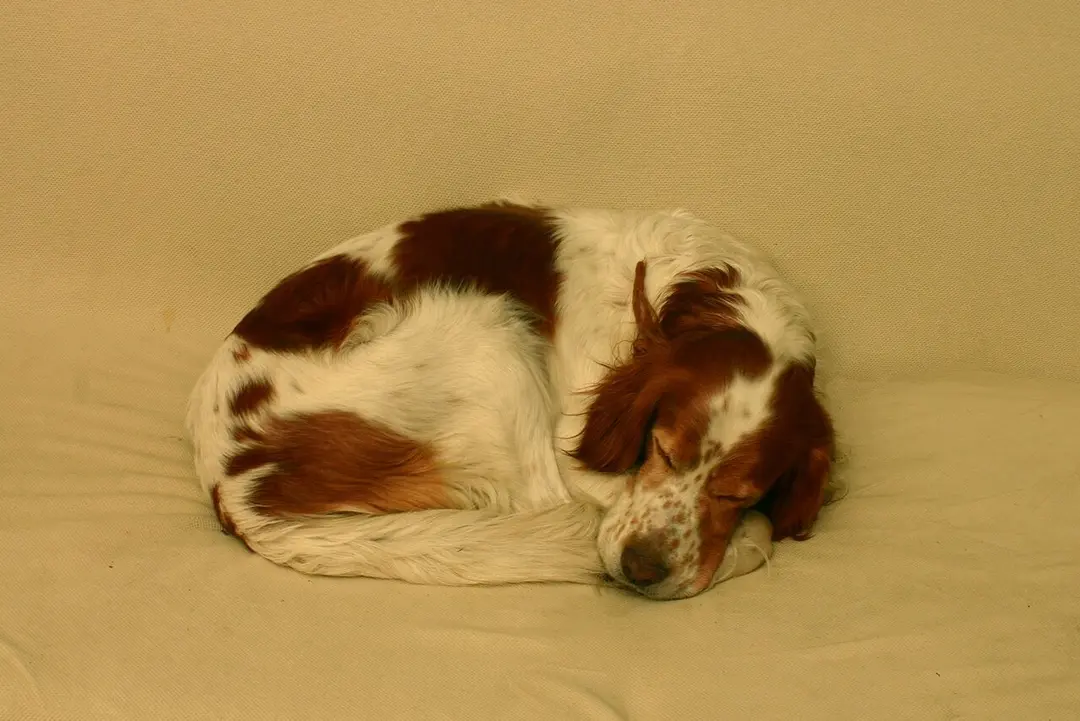
Hunters are often said to have favoured the parti-coloured coat because the dog stays easy to see in the field. It is a strong, athletic dog, more solidly built and less racy than the red setter. The coat is white with clearly defined solid red patches. Light flecking is allowed on the face and lower legs but not on the body. The hair is flat and silky, with feathering on the ears, legs and tail.
Puppy growth
Lifespan
Where it comes from
The Irish Red and White Setter's revival rested on a small group of enthusiasts in the north of Ireland, notably the Reverend Noble Huston, who sought out surviving dogs of the old type between the wars. Interest later spread to Britain and beyond. The breed gained recognition from the Kennel Club and, in the early twenty-first century, from the American Kennel Club. Like other setters, it was bred to range ahead of the guns, find game birds by scent and then set, or freeze, to mark where they lay. The habit dates back to the days when birds were taken with nets.
Breed standard
Questions people ask
Compare with related
Sources
- 1Morrill et al., 2022. Ancestry-inclusive dog genomics challenges popular breed stereotypes. Science 376: eabk0639 (Darwin's Ark). ↑
- 2Dogs Trust. Finding a good, responsible breeder. ↑
- 3American Kennel Club. Screening puppy buyers: how top breeders find the best homes. ↑
- 4
- 5American Kennel Club. Irish Red and White Setter breed page. ↑
- 6
- 7Hawthorne et al., 2004. Body-weight changes during growth in puppies of different breeds. Journal of Nutrition 134(8 Suppl): 2027S–2030S (WALTHAM). ↑