Italian Greyhound
What it's like
In temperament it is affectionate and gentle with its own people but may be reserved with strangers. Playful and agile, it dislikes cold and wet weather, having a thin coat and little body fat.
Living with one
Size and growth
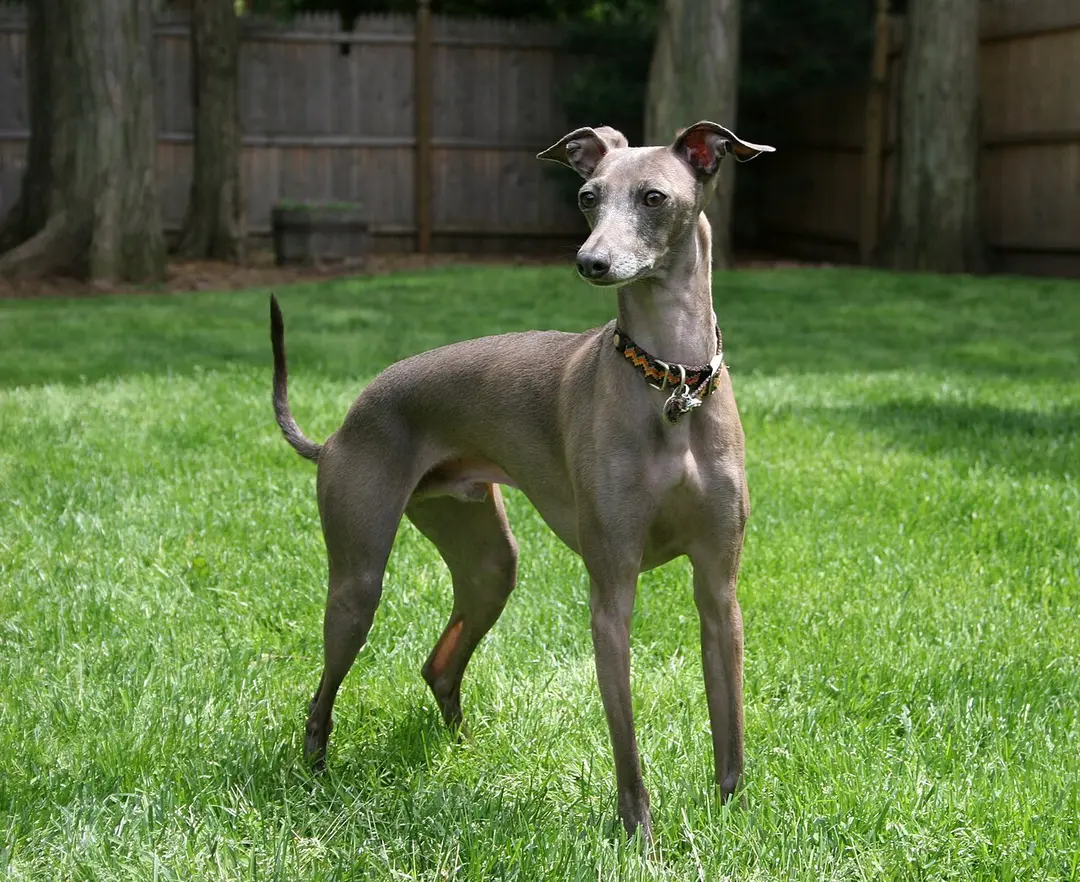
It resembles a greyhound in miniature, with a long, narrow head, small ears folded back, a deep chest, an arched loin and a sharply tucked-up waist. Its high-stepping, springy gait is a hallmark. The coat is short, fine and glossy, in colours including fawn, cream, blue, black and red, with the extent of white markings permitted varying between breed standards.
Puppy growth
Lifespan
Where it comes from
The Italian Greyhound's later history owes much to its standing as a companion of royalty. Frederick the Great of Prussia kept several and lies buried near their graves at Sanssouci, while Catherine the Great and Queen Victoria are among other recorded owners. In Victorian Britain a fashion for ever smaller dogs led some breeders to produce undersized, poorly made animals, and later enthusiasts worked to restore soundness and proportion. Although built as a true sighthound and capable of a fast sprint, the breed has been kept chiefly as a companion; whether it was also used on small game is debated.
Breed standard
Questions people ask
Compare with related
Sources
- 1Morrill et al., 2022. Ancestry-inclusive dog genomics challenges popular breed stereotypes. Science 376: eabk0639 (Darwin's Ark). ↑
- 2Dogs Trust. Finding a good, responsible breeder. ↑
- 3American Kennel Club. Screening puppy buyers: how top breeders find the best homes. ↑
- 4
- 5The Kennel Club. Italian Greyhound breed standard. ↑
- 6
- 7Hawthorne et al., 2004. Body-weight changes during growth in puppies of different breeds. Journal of Nutrition 134(8 Suppl): 2027S–2030S (WALTHAM). ↑
- 8
- 9The Kennel Club. Italian Greyhound. ↑
- 10American Kennel Club. Italian Greyhound breed history. ↑