Norwegian Buhund
What it's like
Buhunds are alert, energetic and quick to learn, with a strong urge to work and a ready voice. They are generally friendly and form close bonds with their household. Some have been trained in Britain as hearing dogs for deaf people, and they also take part in obedience and agility.
Living with one
Size and growth
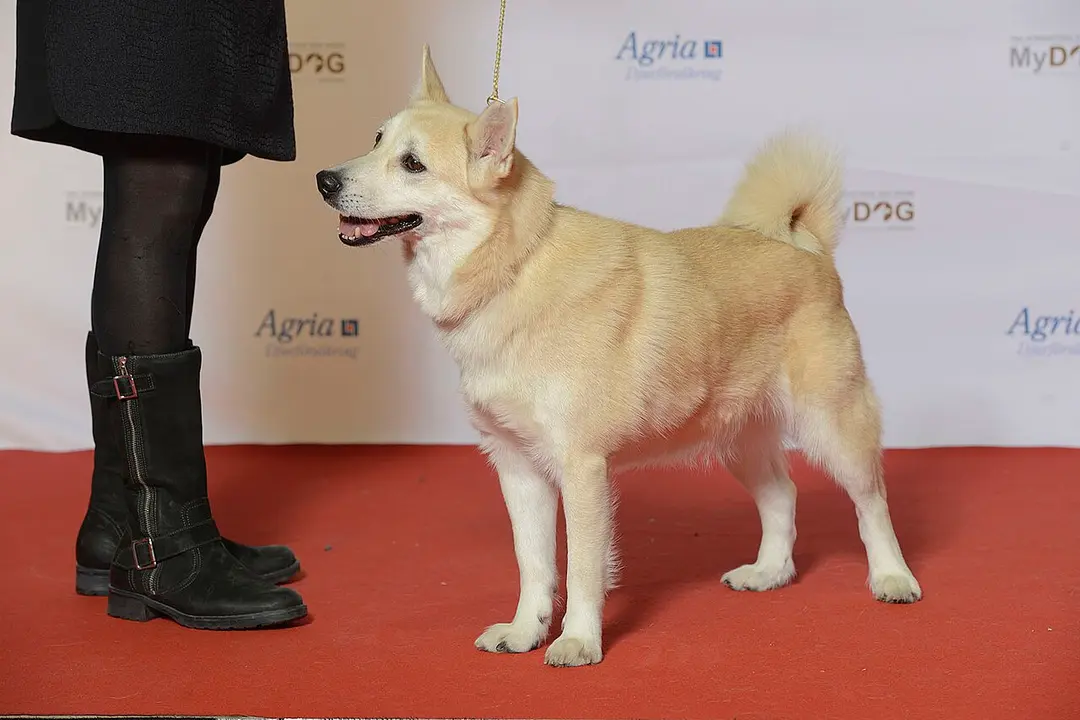
It is a compact, square-built spitz with a wedge-shaped head, sharply pricked ears and a tail carried in a tight curl over the back. The double coat has a harsh, close outer layer over a dense, soft undercoat. It comes in two colours: wheaten, ranging from pale cream to yellowish red and sometimes with a dark mask, and black, preferably solid.
Puppy growth
Lifespan
Where it comes from
The Norwegian Buhund was in danger of dying out by the early twentieth century. Its present form owes much to enthusiasts in western Norway, particularly in the Jæren district, who gathered surviving farm dogs and bred them to a consistent type. A national breed club followed, and after the Second World War dogs were exported to Britain, where the breed has kept a small but steady following. It was bred as an all-purpose farm dog, herding sheep and cattle, guarding the yard and barking to warn of strangers.
Breed standard
Questions people ask
Compare with related
Sources
- 1Morrill et al., 2022. Ancestry-inclusive dog genomics challenges popular breed stereotypes. Science 376: eabk0639 (Darwin's Ark). ↑
- 2Dogs Trust. Finding a good, responsible breeder. ↑
- 3American Kennel Club. Screening puppy buyers: how top breeders find the best homes. ↑
- 4
- 5
- 6Hawthorne et al., 2004. Body-weight changes during growth in puppies of different breeds. Journal of Nutrition 134(8 Suppl): 2027S–2030S (WALTHAM). ↑