Otterhound
What it's like
Bred to work in packs, the Otterhound is generally amiable, even-tempered and sociable with people and other dogs, and often boisterous. Once on a scent it is independent and single-minded. The breed is now rare and appears on the Kennel Club's list of vulnerable native breeds.
Living with one
Size and growth
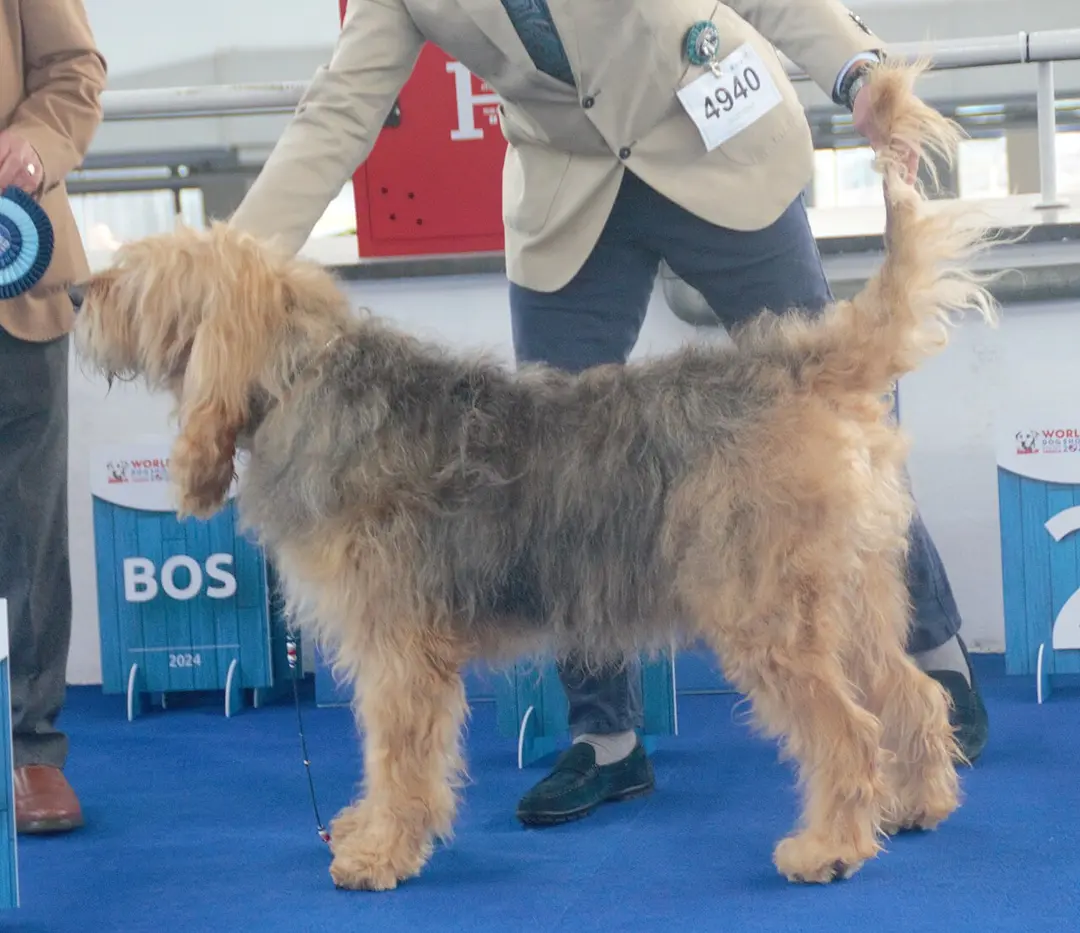
It is a big, strongly built hound with a large head, long hanging ears and a rough, shaggy double coat. The outer coat is harsh and the undercoat woolly and slightly oily. The ears have a distinctive fold along their leading edge, so they hang as if draped. A wide range of colours is accepted, including grizzle, sandy, black and tan, and liver, and the breed's voice is deep and carrying.
Puppy growth
Lifespan
Where it comes from
Hounds were kept to hunt otters along English rivers and streams from medieval times, and the Otterhound is linked to that tradition. King John is often said to have kept such hounds in the early thirteenth century. The breed took its modern form in the nineteenth century from uncertain ancestry, often thought to include the Bloodhound and rough-coated French hounds. Its work was slow and patient: it followed an otter's scent along banks and through water, giving voice as it went.
Breed standard
Questions people ask
Compare with related
Sources
- 1Morrill et al., 2022. Ancestry-inclusive dog genomics challenges popular breed stereotypes. Science 376: eabk0639 (Darwin's Ark). ↑
- 2Dogs Trust. Finding a good, responsible breeder. ↑
- 3American Kennel Club. Screening puppy buyers: how top breeders find the best homes. ↑
- 4
- 5American Kennel Club. Otterhound breed page. ↑
- 6Hawthorne et al., 2004. Body-weight changes during growth in puppies of different breeds. Journal of Nutrition 134(8 Suppl): 2027S–2030S (WALTHAM). ↑
- 7AAFCO, 2016. AAFCO Dog and Cat Food Nutrient Profiles. Association of American Feed Control Officials. ↑
- 8Otterhound Club. History. ↑