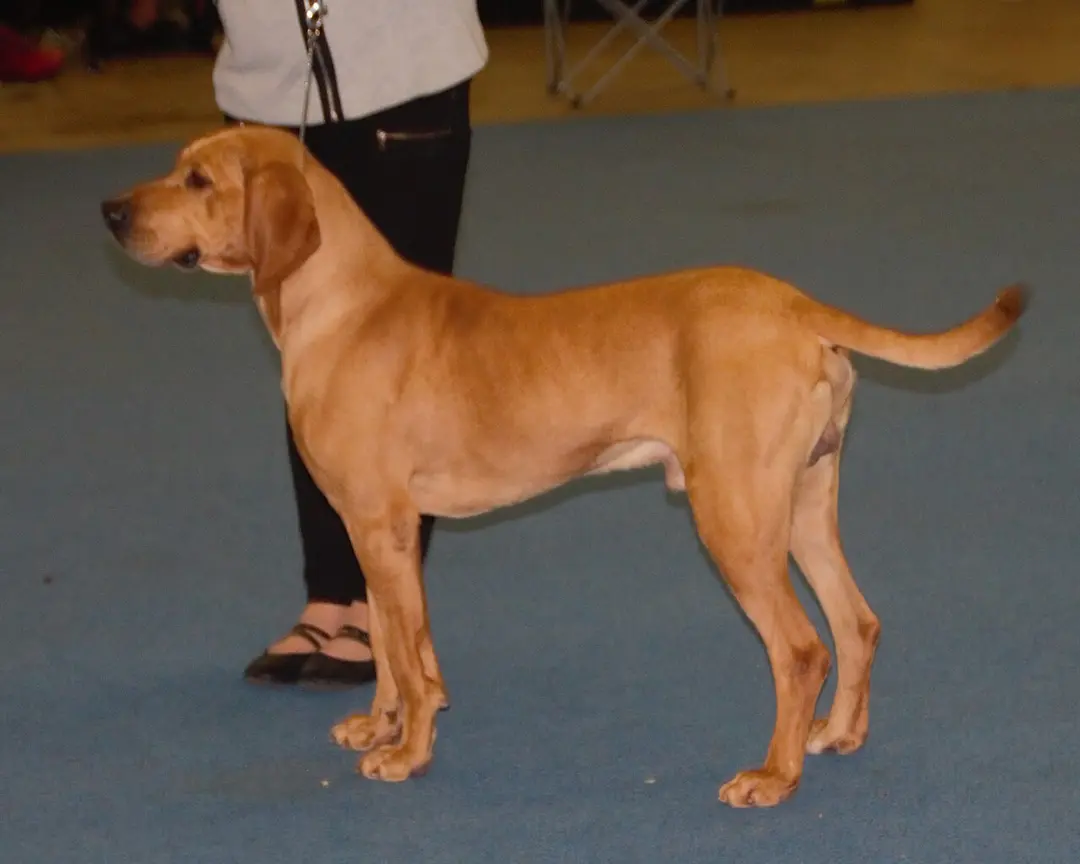
Plott Hound

Loyal and eager to please at home, hard to turn on a trail.
Adult male
23–34 kg
50–75 lb
Adult female
18–29 kg
40–65 lb
Lifespan
12–14 yrs
Class · Field
also Sport

What it's like

In the field the breed is bold, persistent and hard to turn from a trail. At home it is generally loyal, alert and eager to please, though its strong hunting drive stays with it.

Day to day
Activity
Needs lots of exercise
Intelligence
Learns readily, likes games
Handler demand
Needs an experienced owner
With people
Affection
Affectionate on its own terms
Loyalty
Bonded to its family
Independence
Decides for itself
Around the home
Sensitivity
Hardy, takes a busy home in its stride
Voice
Very vocal
Prey drive
Likely to chase small pets
Breed explains only about 9% of how individual dogs differ in behaviour1. Meet the dog. A good breeder breeds for temperament as well as health, and matches each puppy's personality to the right home2,3.
Is a Plott Hound right for you?
Take the breed matcher

Size and growth

A Plott Hound is a medium dog, heavier than a Border Collie and lighter than a Golden Retriever. Males end up clearly heavier than females. It is one of the heaviest medium breeds.

The Plott is a lean, muscular and athletic hound with hanging ears and a short, smooth, fine coat. It is usually brindle, ranging from light tan streaked with darker hairs to an almost black brindle, sometimes with a black saddle. Its voice is a loud, ringing, bugle-like bawl that carries far through hill country.

Puppy growth

Reference curve · community data appears as owners log
By about 5 months, a male Plott Hound puppy is already as heavy as a grown Staffordshire Bull Terrier. They grow fastest between 3 and 4 months old. The biggest males grow into the size large-breed puppy foods are made for.
Fully grown
11 mo
Both sexes, at 99% of adult weight7
Male
Female
Shaded: expected range
0102030402m4m6m9m12m18m
0102030402m3m4m6m9m12m18m
Age
Male
Female
2 months
4.9–7.4 kg 10.8–16.3 lb
4.4–7.1 kg 9.7–15.7 lb
3 months
7.3–10.9 kg 16.1–24.0 lb
6.2–10.1 kg 13.7–22.3 lb
4 months
10.6–15.8 kg 23.4–34.8 lb
8.8–14.4 kg 19.4–31.7 lb
5 months
13.6–20.3 kg 30.0–44.8 lb
11.1–18.2 kg 24.5–40.1 lb
6 months
16.2–24.3 kg 35.7–53.6 lb
13.1–21.3 kg 28.9–47.0 lb
7 months
18.2–27.2 kg 40.1–60.0 lb
14.5–23.6 kg 32.0–52.0 lb
8 months
19.6–29.3 kg 43.2–64.6 lb
15.5–25.2 kg 34.2–55.6 lb
9 months
20.6–30.8 kg 45.4–67.9 lb
16.2–26.4 kg 35.7–58.2 lb
10 months
21.2–31.8 kg 46.7–70.1 lb
16.7–27.2 kg 36.8–60.0 lb
11 months
21.7–32.5 kg 47.8–71.7 lb
17.1–27.8 kg 37.7–61.3 lb
12 months
22.0–32.9 kg 48.5–72.5 lb
17.3–28.2 kg 38.1–62.2 lb
15 months
22.6–33.8 kg 49.8–74.5 lb
17.9–29.1 kg 39.5–64.2 lb

Lifespan

No vet study has measured how long Plott Hounds live yet. The 12–14 years shown is a general figure without a published source.

Where it comes from

The Plott Hound grew from dogs Johannes Plott brought from Germany to America in 1750, which his family kept shaping after moving to Haywood County, in North Carolina's mountains, around 1800. There it hunted bear and, after European boar were imported in 1908, boar too; the UKC notes that, unlike most coonhounds, it does not trace its ancestry to the foxhound. North Carolina made it the state dog in 19898,9,10.

The Plott Hound remained a family strain for generations. It passed among the Plotts and their neighbours in western North Carolina and was seldom sold widely. Some blood from another local hound line was added in the early twentieth century, but the breed kept its own type and name. The United Kennel Club recognised it in the mid-twentieth century, and the American Kennel Club followed in the first decade of the twenty-first. The breed was developed to track big game across rough, wooded ground, working in a pack to hold quarry at bay or drive it up a tree until the hunters arrived. Many are now used on raccoon and other game as well.

Breed standard

No FCI standard covers it; its group here is AKC Hound group.

Questions people ask

General guidance for dogs rather than a measured Plott Hound figure: most females have a first season somewhere between six and fifteen months, and cycles then settle to roughly every 180 days. Smaller breeds tend to start earlier and larger ones later, so a medium-sized breed is most likely somewhere in the middle.
Track your own Plott Hound
Log a minute a day and watch them sit on these curves. Free.

Sources

Uncited on this page: Lifespan — no reviewed source yet, so it is a general reference figure rather than a published one.
Something wrong on this page?
Parts of this page were written by AI ·