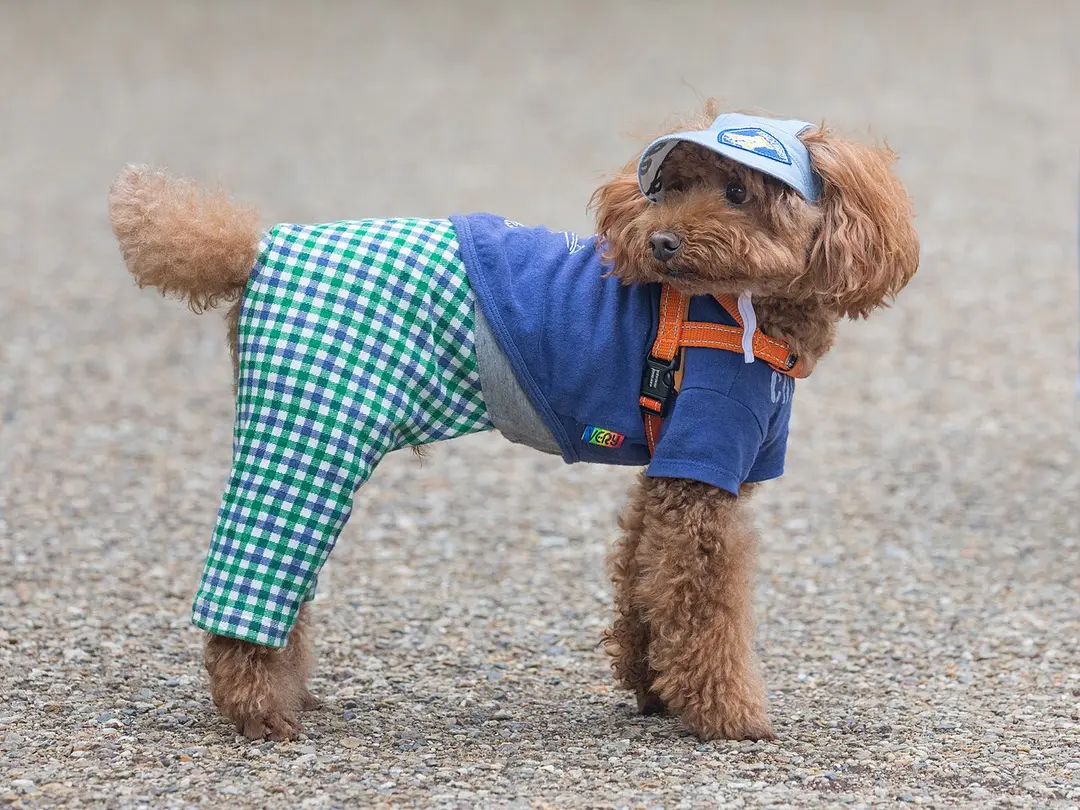
Variety of Poodle

Poodle (Toy)

Alert and quick to learn, close to its household.
Adult weight
1.8–2.7 kg
4–6 lb
Lifespan
14 yrs
Handler demand
Suits a first-time owner
Class · Lap dog
also Companion

What it's like

In temperament the Toy Poodle is alert, lively and quick to learn, moving with a light, springy gait and a proud carriage. It is usually closely attached to its household and can be reserved with strangers, and it often does well in obedience and agility training.

Owners in a large survey found Toy Poodles much like dogs in general on independence, calmness, friendliness with people and friendliness with other dogs. Breed is only a small part of any one dog's personality, so meet the dog before you decide.
Day to day
Activity
Happy with modest walks
Intelligence
Needs daily brain work
Handler demand
Suits a first-time owner
With people
Affection
A lap or leaning dog
Loyalty
Sticks close to its people
Independence
Keen to work with you
Around the home
Sensitivity
Needs a calm, predictable home
Voice
Barks to alert, then settles
Prey drive
Usually fine with small pets
Breed explains only about 9% of how individual dogs differ in behaviour1. Meet the dog. A good breeder breeds for temperament as well as health, and matches each puppy's personality to the right home2,3.
Is a Poodle (Toy) right for you?
Take the breed matcher

Living with one

Loose hair stays caught in the coat until it is brushed, stripped or clipped out. Plan on brushing a few times a week, plus clipping every 6–8 weeks. It needs a modest amount of exercise compared with other breeds.

Size and growth

A Toy Poodle is a toy dog, heavier than a Chihuahua and lighter than a Yorkshire Terrier. It is one of the lightest toy breeds.

Bred as a companion, the Toy keeps the Poodle build in miniature: a square, elegant outline, a long fine muzzle, dark oval eyes and a tail carried high. The coat is dense, harsh-textured and tightly curled; it sheds little and needs regular clipping. Show standards call for solid colours, including black, white, apricot, silver, brown and cream. The ornate show trims are said to come from the clip once given to working water dogs, though this is told rather than proven.

Puppy growth

Reference curve · community data appears as owners log
Toy Poodles reach half their adult weight at about 4 months. They grow fastest between 3 and 4 months old.
Fully grown
10 mo
Both sexes, at 99% of adult weight7
Male
Female
Shaded: expected range
01232m4m6m9m12m18m
01232m3m4m6m9m12m18m
Age
Male
Female
2 months
0.6–0.9 kg 1.3–2.0 lb
0.6–1.0 kg 1.3–2.2 lb
3 months
0.7–1.1 kg 1.5–2.4 lb
0.8–1.2 kg 1.8–2.6 lb
4 months
1.0–1.4 kg 2.2–3.1 lb
1.0–1.5 kg 2.2–3.3 lb
5 months
1.1–1.7 kg 2.4–3.7 lb
6 months
1.3–1.9 kg 2.9–4.2 lb
7 months
1.4–2.1 kg 3.1–4.6 lb
1.4–2.0 kg 3.1–4.4 lb
8 months
1.5–2.2 kg 3.3–4.9 lb
1.4–2.1 kg 3.1–4.6 lb
9 months
1.5–2.3 kg 3.3–5.1 lb
1.5–2.2 kg 3.3–4.9 lb
10 months
1.6–2.4 kg 3.5–5.3 lb
1.5–2.3 kg 3.3–5.1 lb
11 months
1.6–2.4 kg 3.5–5.3 lb
12 months
1.6–2.5 kg 3.5–5.5 lb
1.6–2.4 kg 3.5–5.3 lb
15 months
1.7–2.6 kg 3.7–5.7 lb
1.7–2.5 kg 3.7–5.5 lb
18 months
1.8–2.7 kg 4–6 lb
1.8–2.6 kg 4.0–5.7 lb

Health and lifespan

In UK vet records, gum disease turns up more often in Toy Poodles than in crossbreeds: it is more likely. It is not rated serious. These are figures for the breed as a whole, not a prediction for your dog.
Listed by likelihood level, highest first, then by how serious it is, then by name.
  • Gum disease
    More likely
    Impact: moderate

Lifespan

In UK vet records, the typical Toy Poodle lived to about 14 years, longer than the typical toy breed.

Where it comes from

The Toy Poodle was scaled down from the larger Poodles, which were water retrievers, to be a city companion. Toy Poodles were favoured by Louis XVI, yet the AKC also credits the United States with first breeding the Toy early in the 20th century. Its standard is the same as the Standard and Miniature Poodles' in everything except height10,11,12,13.

The Toy Poodle is the size variety below the Miniature, and its history runs alongside that of its larger relatives. The name comes from the German Pudel, linked to splashing in water, a reminder of the retrieving dogs behind it. Small Poodles were a familiar sight in eighteenth- and nineteenth-century Europe, both as household pets and as circus performers, valued for how readily they learned tricks.

Breed standard

Kennel clubs do not all register this breed the same way.

Questions people ask

General guidance for dogs rather than a measured Toy Poodle figure: most females have a first season somewhere between six and fifteen months, and cycles then settle to roughly every 180 days. Smaller breeds tend to start earlier and larger ones later, so a toy breed is most likely at the early end.
Track your own Poodle (Toy)
Log a minute a day and watch them sit on these curves. Free.

Sources

Something wrong on this page?
Parts of this page were written by AI ·