Pumi
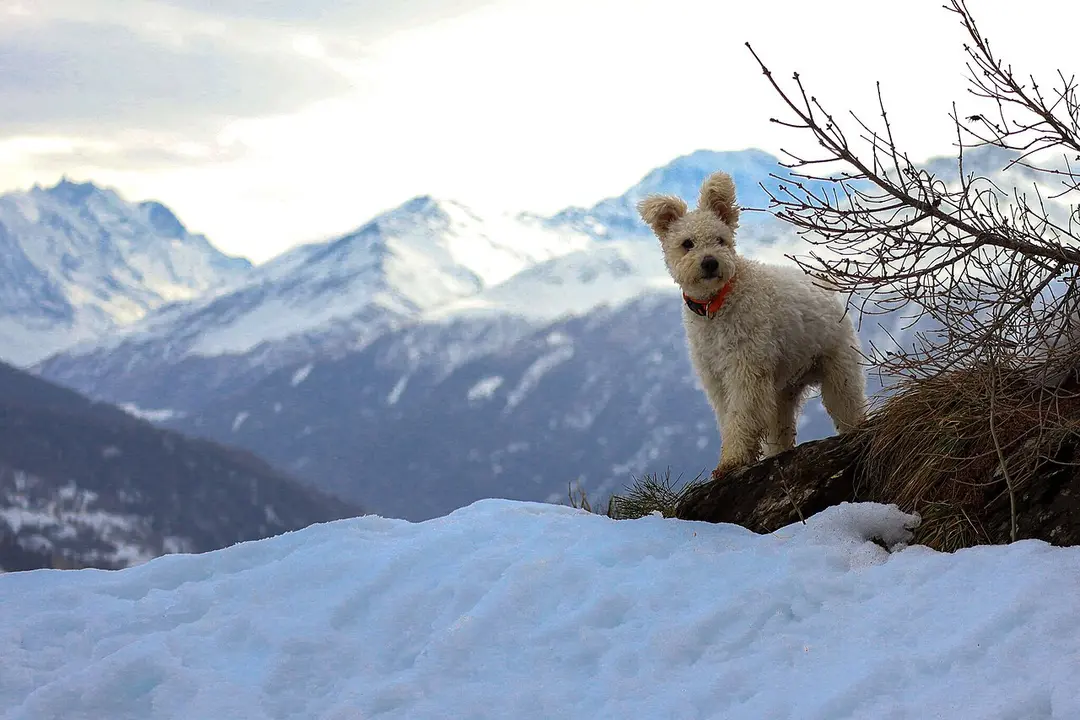
What it's like
In temperament the Pumi is alert, quick and busy, closely attached to its own people and reserved with strangers. It is a keen watchdog and readily vocal, a trait that suited its working past. The coat is usually kept in shape by combing, wetting and letting it dry naturally, with occasional trimming.
Living with one
Size and growth
The Pumi is a lightly built, squarely proportioned dog with a long, narrow head, upright ears whose tips fold forward, and a tail curled over the back. Its coat of wavy hair, a mix of harsh and softer strands, forms distinctive corkscrew curls and never cords like the Puli's. Colours include grey, black, fawn and white, and grey puppies are usually born black and lighten as they mature.
Puppy growth
Lifespan
Where it comes from
The Pumi developed as a farm dog in western Hungary, especially Transdanubia, where small holdings needed a quick, versatile helper. After its separation from the Puli, Hungarian breeders fixed its type during the twentieth century, and the FCI recognised it as a distinct breed. It later spread to Finland and more recently to North America and Britain. It was bred to drive and gather cattle, sheep and pigs, often in tight spaces, working close to the stock and using its voice freely.
Breed standard
Questions people ask
Compare with related
Sources
- 1Morrill et al., 2022. Ancestry-inclusive dog genomics challenges popular breed stereotypes. Science 376: eabk0639 (Darwin's Ark). ↑
- 2Dogs Trust. Finding a good, responsible breeder. ↑
- 3American Kennel Club. Screening puppy buyers: how top breeders find the best homes. ↑
- 4
- 5
- 6Hawthorne et al., 2004. Body-weight changes during growth in puppies of different breeds. Journal of Nutrition 134(8 Suppl): 2027S–2030S (WALTHAM). ↑
- 7The Royal Kennel Club. Hungarian Pumi. ↑