Swedish Vallhund
What it's like
In temperament the Vallhund is friendly, energetic and alert, with a herder's quick reactions. It is watchful with strangers and known for being vocal, using a wide range of barks and other sounds.
Living with one
Size and growth
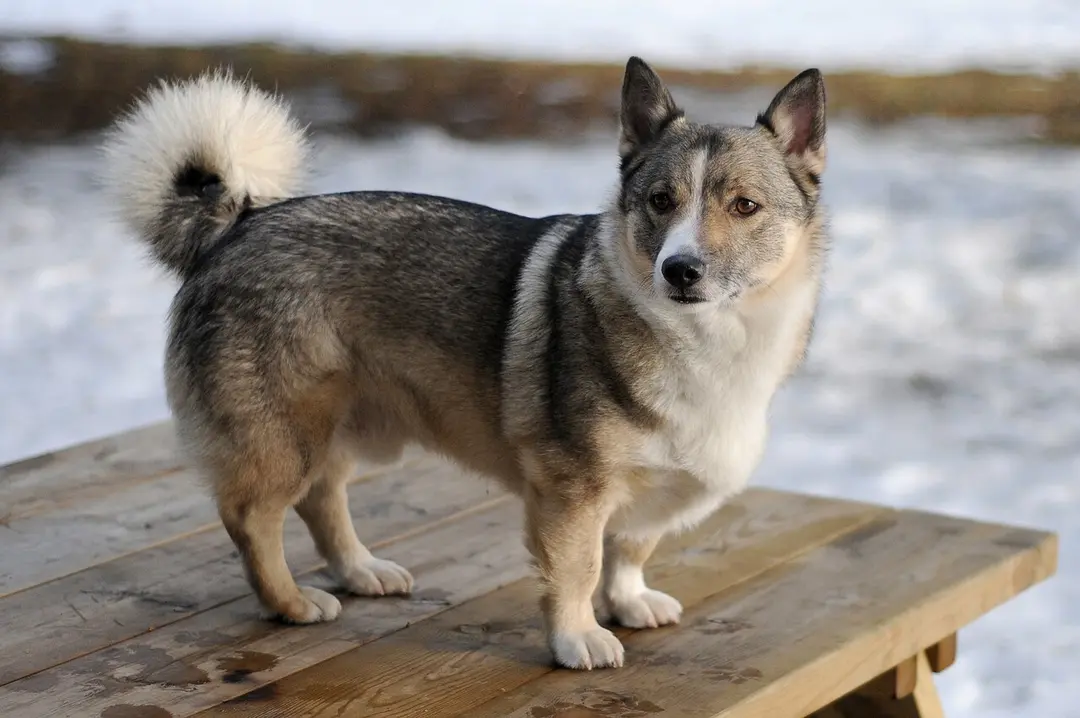
The breed is long in the body and short in the leg, sturdy and muscular, with a wedge-shaped head and pricked ears. The harsh, close double coat is usually sable grey, greyish brown or reddish yellow, with darker hairs along the back and lighter markings on the shoulders that form a distinctive harness pattern. Unusually, the tail varies within the breed: puppies may be born with a full curled tail, a stub or no tail at all.
Puppy growth
Lifespan
Where it comes from
The Swedish Vallhund, called the Västgötaspets in Sweden after its home province, was recognised by the Swedish Kennel Club in the nineteen-forties, soon after the revival of the old farm type. Numbers stayed modest for decades. Dogs reached Britain in the nineteen-seventies, and the breed has since spread to other countries while remaining uncommon. It was a general farm dog. Its main work was driving cattle by nipping at their heels, and its low build is thought to help it duck flying hooves. It also kept down rats and warned of strangers.
Breed standard
Questions people ask
Compare with related
Sources
- 1Morrill et al., 2022. Ancestry-inclusive dog genomics challenges popular breed stereotypes. Science 376: eabk0639 (Darwin's Ark). ↑
- 2Dogs Trust. Finding a good, responsible breeder. ↑
- 3American Kennel Club. Screening puppy buyers: how top breeders find the best homes. ↑
- 4
- 5American Kennel Club. Swedish Vallhund breed page. ↑
- 6
- 7Hawthorne et al., 2004. Body-weight changes during growth in puppies of different breeds. Journal of Nutrition 134(8 Suppl): 2027S–2030S (WALTHAM). ↑