Tibetan Spaniel
What it's like
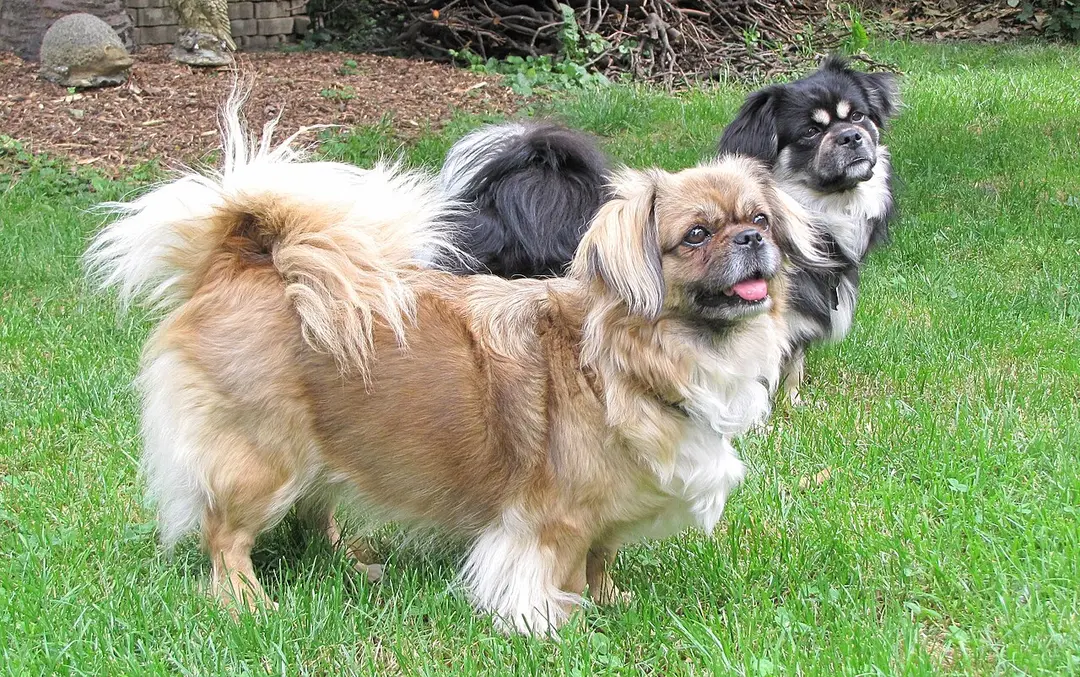
The Tibetan Spaniel is a small, compact dog, slightly longer than tall, with a gently domed head, a blunt, medium-length muzzle and a slightly undershot bite. The silky double coat lies flat and forms a mane or shawl about the neck, more marked in males. The ears, the backs of the forelegs and the plumed tail are feathered, and the tail curls over the back. Any colour is permitted. In temperament it is alert, quick-witted and devoted to its household, but reserved with strangers and independent in outlook.
Living with one
Size and growth
Puppy growth
Health and lifespan
- Mouth melanomaLab-confirmed casesMore likelyImpact: life-limiting
Lifespan
Where it comes from
The Tibetan Spaniel is a spaniel in name only, with no connection to the gundog breeds that share the word. In Britain the breed grew slowly after the Second World War from a small number of imports, and a breed association was formed in the late nineteen-fifties. It has since been recognised by the major kennel clubs of Europe and North America. Tradition says its monastery work was to watch and warn. The dogs are said to have sat on high walls and barked at approaching strangers, and the breed still likes to settle on a raised vantage point. A story that they turned prayer wheels is often repeated, but it is told rather than known.
Breed standard
Questions people ask
Compare with related
Sources
- 1Morrill et al., 2022. Ancestry-inclusive dog genomics challenges popular breed stereotypes. Science 376: eabk0639 (Darwin's Ark). ↑
- 2Dogs Trust. Finding a good, responsible breeder. ↑
- 3American Kennel Club. Screening puppy buyers: how top breeders find the best homes. ↑
- 4
- 5The Kennel Club. Tibetan Spaniel breed standard. ↑
- 6
- 7Hawthorne et al., 2004. Body-weight changes during growth in puppies of different breeds. Journal of Nutrition 134(8 Suppl): 2027S–2030S (WALTHAM). ↑
- 8
- 9
- 10The Kennel Club. Tibetan Spaniel. ↑