Australian Terrier
What it's like
In temperament it is spirited, alert and self-assured, quick to bark and keen to dig, yet generally affectionate and steady with its own household. Its terrier instinct to chase small animals remains strong. It was recognised by the American Kennel Club in the nineteen-sixties.
Living with one
Size and growth
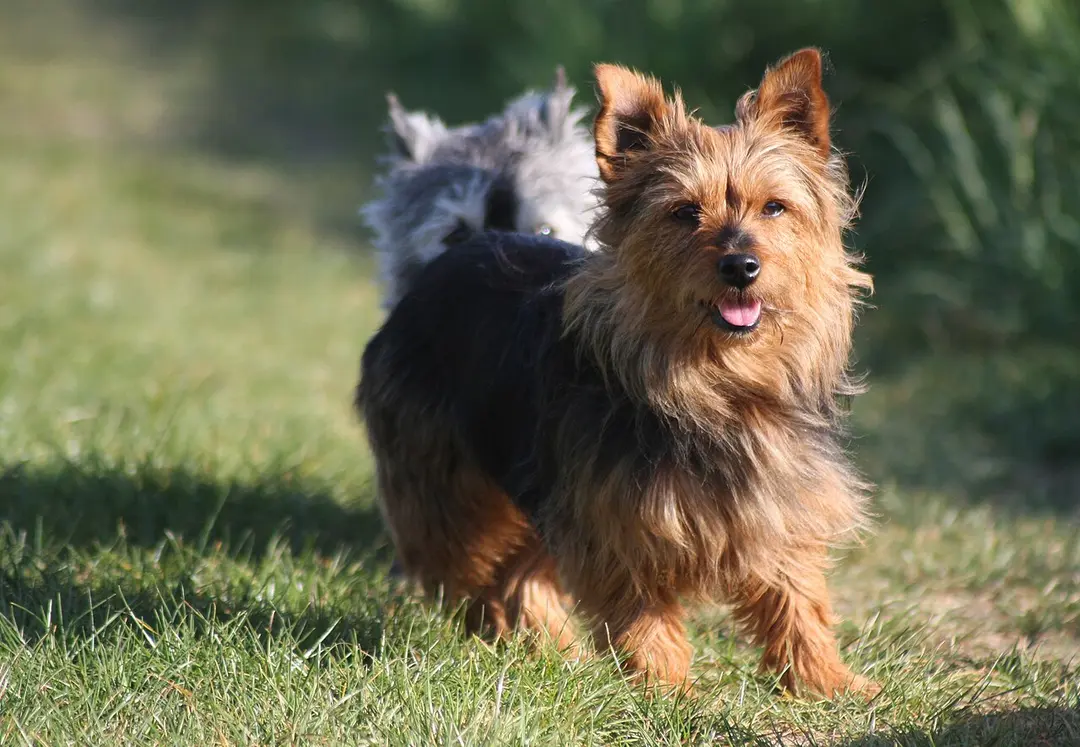
It is a sturdy, low-set dog, longer than it is tall, with small pricked ears, dark eyes and a harsh, straight outer coat over a short soft undercoat. A ruff frames the neck, and a softer, paler topknot covers the crown. Coats are blue and tan, sandy or red.
Puppy growth
Lifespan
Where it comes from
The Australian Terrier took its modern shape in the second half of the nineteenth century, when breeders crossed the local rough-coated dogs with several imported terriers; the Cairn, Dandie Dinmont, Skye, Yorkshire and Scottish terriers are commonly named among them. Dogs of this type were shown in Melbourne as broken-coated terriers from the late eighteen-sixties, and the breed reached Britain in the following century, gaining Kennel Club recognition in the nineteen-thirties. The breed was kept as a working companion on farms, goldfields and stations, killing rats and rabbits, reputedly tackling snakes, and raising the alarm at strangers.
Breed standard
Questions people ask
Compare with related
Sources
- 1Morrill et al., 2022. Ancestry-inclusive dog genomics challenges popular breed stereotypes. Science 376: eabk0639 (Darwin's Ark). ↑
- 2Dogs Trust. Finding a good, responsible breeder. ↑
- 3American Kennel Club. Screening puppy buyers: how top breeders find the best homes. ↑
- 4
- 5American Kennel Club. Australian Terrier breed page. ↑
- 6
- 7Hawthorne et al., 2004. Body-weight changes during growth in puppies of different breeds. Journal of Nutrition 134(8 Suppl): 2027S–2030S (WALTHAM). ↑
- 8The Kennel Club. Australian Terrier. ↑