Japanese Akita Inu
What it's like
The breed is calm, dignified and loyal to its family, reserved with strangers and can be intolerant of other dogs. Hachikō, an Akita born in Odate, waited at Shibuya station for his master's return for years after the man's death, and Helen Keller is often credited with bringing the first Akita to the United States.
Size and growth
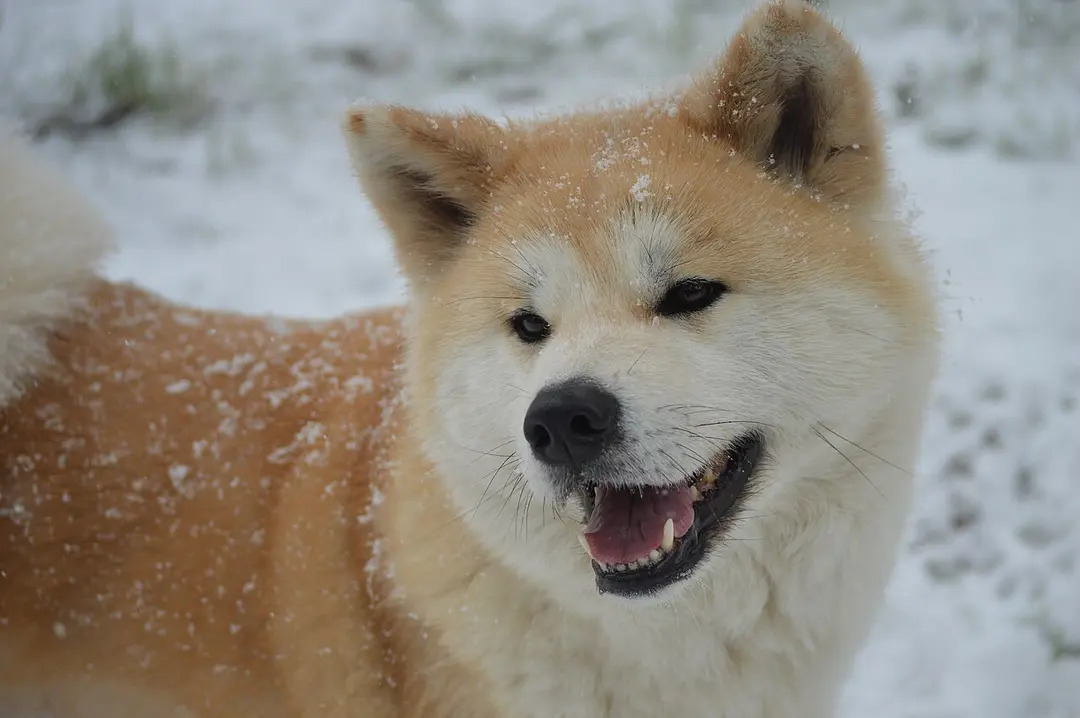
It is a large, sturdy spitz with a broad head, small, almost triangular eyes and thick triangular ears that stand erect and tilt forward. The tail curls tightly over the back. A harsh outer coat covers a dense undercoat, in red fawn, sesame, brindle or white. Coloured dogs show urajiro, a pale shading on the cheeks, chest and underside. A black mask, often seen in the American Akita, is not typical of this breed.
Puppy growth
Lifespan
Where it comes from
The Japanese Akita Inu took its present form after the Second World War, when breeders favoured the Ichinoseki line and moved away from the Dewa type, which showed the influence of Western breeds, towards a more spitz-like dog. Akitas taken home by American servicemen developed separately, and the FCI now recognises the two as distinct breeds. Behind both lie the hunting dogs of northern Honshu, which matagi hunters used on large game such as bear.
Breed standard
Questions people ask
Compare with related
Sources
- 1Morrill et al., 2022. Ancestry-inclusive dog genomics challenges popular breed stereotypes. Science 376: eabk0639 (Darwin's Ark). ↑
- 2Dogs Trust. Finding a good, responsible breeder. ↑
- 3American Kennel Club. Screening puppy buyers: how top breeders find the best homes. ↑
- 4
- 5Hawthorne et al., 2004. Body-weight changes during growth in puppies of different breeds. Journal of Nutrition 134(8 Suppl): 2027S–2030S (WALTHAM). ↑
- 6
- 7AAFCO, 2016. AAFCO Dog and Cat Food Nutrient Profiles. Association of American Feed Control Officials. ↑
- 8Wikidata. Item Q29164. ↑
- 9Akita Inu Hozonkai Europe. About AKIHO. ↑
- 10Japanese Akitainu Club of America. Breed history. ↑
- 11
- 12The Kennel Club. Breed list. ↑
- 13American Kennel Club. Akita breed page. ↑