Shetland Sheepdog (Sheltie)
What it's like
Shelties learn quickly, respond well to handling and are closely attached to their own people, though they are often reserved with strangers. They are notably vocal, a trait often linked to their past as watchdogs, and they have a strong record in obedience, agility and herding trials.
Living with one
Size and growth
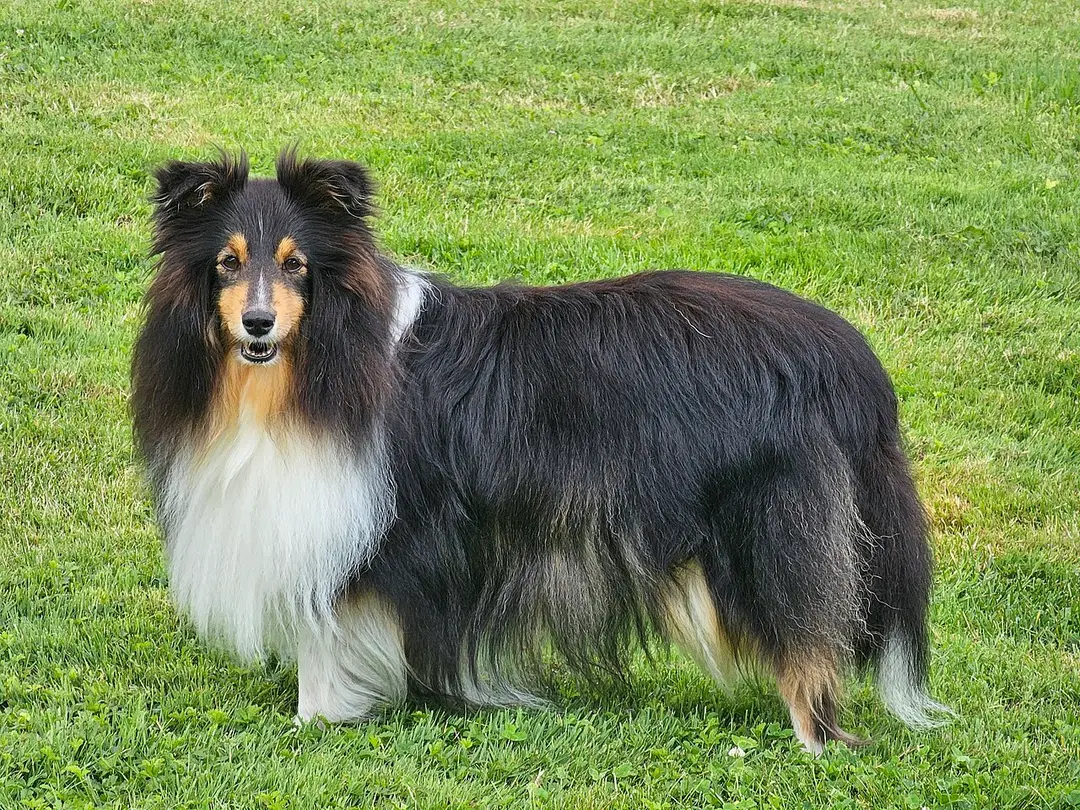
It resembles a small Rough Collie, with a long, tapering head, small ears tipped forward at the ends and a long double coat. The coat has a harsh, straight outer layer over a soft, dense undercoat and forms a full mane and frill. Usual colours are sable, tricolour, blue merle, and black with white or tan.
Puppy growth
Health and lifespan
- Underactive thyroidMuch more likelyImpact: moderate
- Melanoma of the eye or eyelidLab-confirmed casesMore likelyImpact: serious
Lifespan
Where it comes from
The Shetland Sheepdog, usually called the Sheltie, took much of its modern shape on the British mainland. Around the time of the First World War and into the nineteen-twenties, breeders used further Rough Collie crosses to settle on a uniform type. The old island dog, which had varied a good deal in looks, was largely absorbed into the new breed. In Shetland it had been known as the toonie dog, from a local word for a farm. It was kept as an all-round crofter's dog, herding sheep and warning of strangers.
Breed standard
Questions people ask
Compare with related
Sources
- 1Morrill et al., 2022. Ancestry-inclusive dog genomics challenges popular breed stereotypes. Science 376: eabk0639 (Darwin's Ark). ↑
- 2Dogs Trust. Finding a good, responsible breeder. ↑
- 3American Kennel Club. Screening puppy buyers: how top breeders find the best homes. ↑
- 4
- 5American Kennel Club. Shetland Sheepdog breed page. ↑
- 6
- 7Hawthorne et al., 2004. Body-weight changes during growth in puppies of different breeds. Journal of Nutrition 134(8 Suppl): 2027S–2030S (WALTHAM). ↑
- 8
- 9
- 10
- 11
- 12American Kennel Club. Shetland Sheepdog history. ↑
- 13American Shetland Sheepdog Association. History. ↑